0555-6768298
0555-6768298


In the field of sheet metal bending, the selection of a tooling system is a key factor that determines finished product accuracy, tool-change efficiency, and overall production adaptability. The tooling systems widely used in the industry today can be generally categorized intoAmerican StyleandEuropean Style. These two systems differ significantly in structural design, precision performance, and operating methods.The following section provides a comprehensive comparison from multiple perspectives to help customers choose the tooling solution that best fits their specific production requirements.
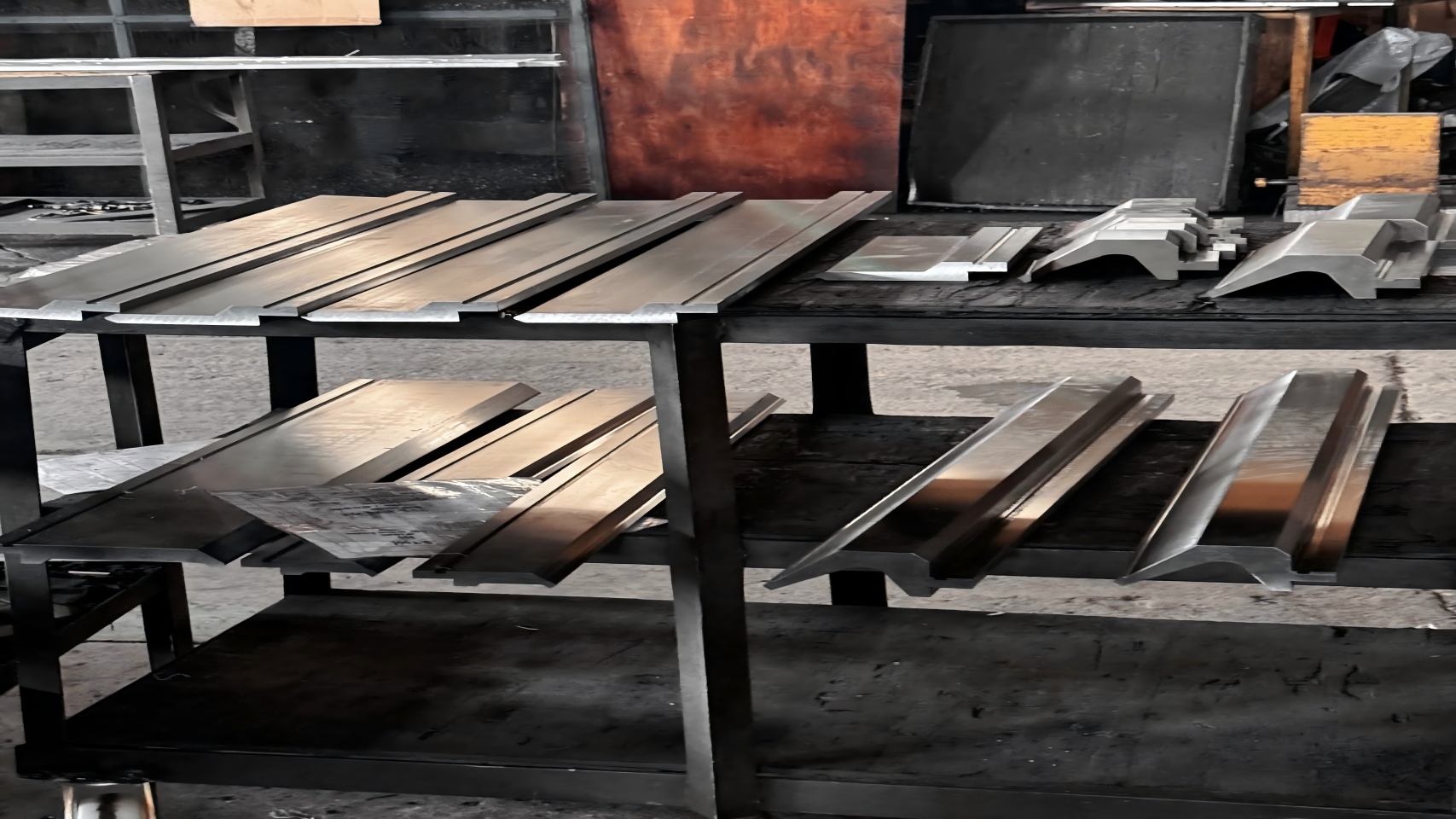 Differences in Clamping Structure
American-style press brake tooling uses a thick rectangular shank and relies mainly on manual clamping. It is strong and durable but slower when changing tools.European-style tooling features a narrower precision-machined shank, often with a safety tang, and is compatible with quick-release or hydraulic clamping systems for faster and more accurate setup.
Precision and Tolerances
American-style tooling provides a reliable foundation of accuracy for general bending needs. However, when processing requirements increase, European-style tooling represents a higher performance benchmark. With its more precise manufacturing and stricter tolerance control, it ensures exceptional consistency and repeatability in bending quality, making it the ideal solution for CNC automated production and applications with demanding dimensional and angular requirements.
American-style tooling is often supplied in long lengths with limited segmentation options.European-style tooling offers a wide range of small segments such as 10mm, 15mm, and 20mm, providing greater flexibility and faster changeovers, especially for small batches and multi-shape production.
American-style tooling is known for its robust and durable heavy-duty construction, emphasizing rigidity and stability under extreme loads. This makes it particularly suitable for thick-plate bending or high-tonnage, heavy-duty forming applications. In contrast, European-style tooling prioritizes precision and efficiency. Through optimized materials and structural design, it achieves a lighter configuration that better serves precision sheet-metal forming and supports the fast-paced demands of automated, continuous production.
From a market distribution perspective, American-style tooling is a typical “regional standard,” closely tied to American clamping systems and primarily dominant in the North American market. European-style tooling, on the other hand, has evolved into a “global standard,” holding a strong presence in both European and Asian markets. Its broad compatibility—supporting quick-clamping systems from multiple brands such as Amada and Trumpf—along with its high level of standardization, has made it the default choice for most modern CNC press brakes worldwide. In practice, it has become the universal language of precision sheet-metal fabrication.
In summary, American-style tooling excels in strength and heavy-duty applications, while European-style tooling offers higher precision, faster tool changes, and greater flexibility—making it ideal for modern, high-efficiency sheet-metal production. Companies should select the system that best matches their process requirements, machine type, and production workflow to achieve optimal bending quality and productivity.
Please read on, stay posted, subscribe, and we welcome you to tell us what you think.


 ONLINE
 0555-6768298
 0555-6769126
 sales2@cngolin.cn
 +86 18251802252